Introduction to Enterprise-Grade Attack Surface Management Solutions
I. Pain Points Direct Hit
🔴 Familiar Dilemmas and Hidden Concerns
Late at night at 23:45, you just finished a security review meeting. On your desk, a latest vulnerability scan report lies quietly — covered with green "compliant" checkmarks. Yet, your brow remains furrowed.
You know clearly in your heart: this seemingly perfect report only covers "known, registered, managed" assets. And in that unseen darkness, crises are quietly brewing.
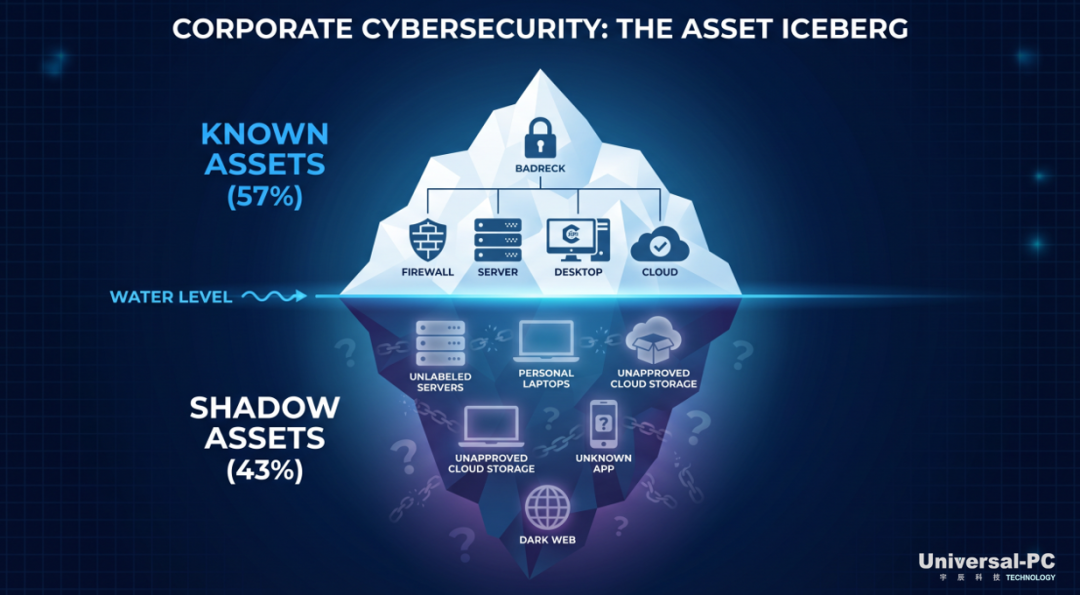
Test servers hastily set up by development teams to meet deadlines, cloud accounts of departed employees not cancelled, mini-programs launched by business departments without approval, and even the recently and quietly introduced OpenClaw framework and AI large model interfaces... They linger like ghosts outside the IT management ledger.
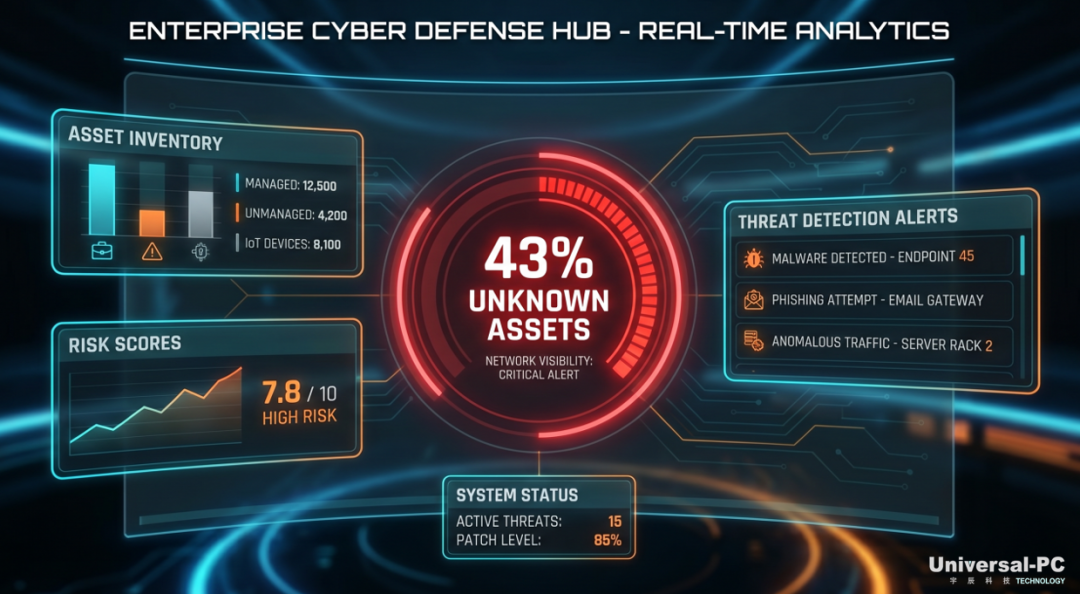
As industry research points out, approximately43% of assets on an enterprise's attack surface are unknown to the security team, and these unknown assets are precisely the preferred targets of attackers. When malicious scans occur on the internet an average of every 3 minutes, are you certain that every inch of the enterprise's digital perimeter is under control?
II. Root Cause Analysis
🔴 New IT Assets Are Dismantling Traditional Defenses
In the past, we were accustomed to defining assets by IP and MAC addresses. But in the cloud-native and AI era, the forms of assets have undergone exponential fission. Mini-program ecosystems, API interfaces, OpenClaw open-source components, and even AI training instances connected to large models — these new IT assets are expanding the enterprise's external attack surface at an alarming rate.
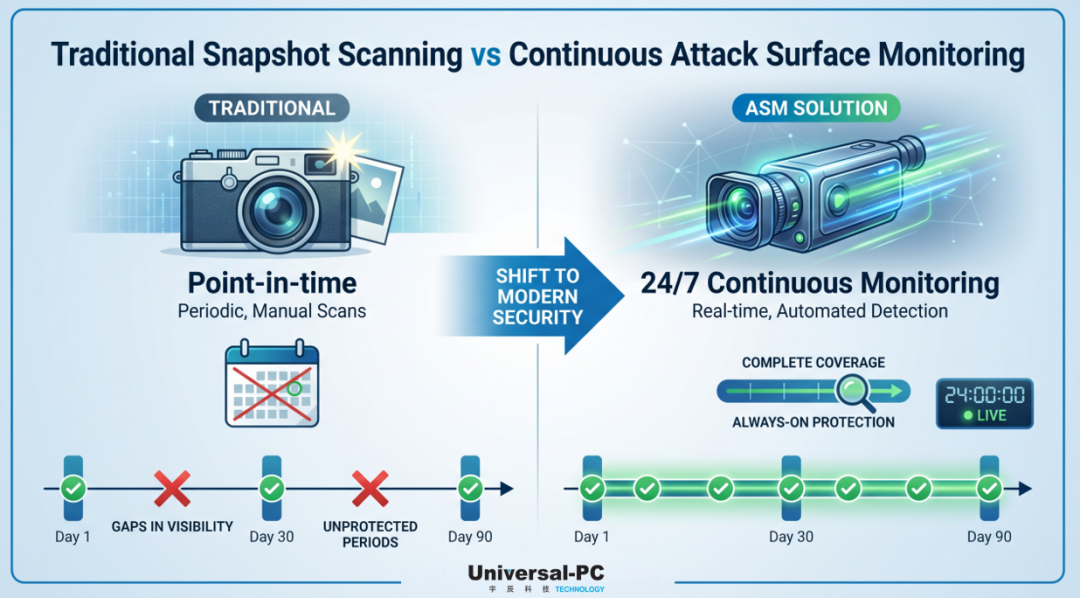
Gartner research points out that with the increasing complexity and decentralization of the technology environment, as well as the formation of SaaS applications and supply chains, enterprise attack surface management is under unprecedented pressure. More critically, facing the dynamically changing internet exposure surface, traditional semi-annual penetration tests or intermittent scanning can only provide a "snapshot-style" illusion of compliance. Once the asset view lags in updating, critical vulnerabilities slip through the net.
🟠 Not All Vulnerabilities Are Worth Your Sleepless Nights
"Asset discovery is far from enough." This is the consensus of many CISOs. When massive assets are discovered, what follows are thousands of security alerts. Security teams often get caught in an exhausting "whack-a-mole" game, while overlooking the core contradiction: 90% of external network risks are concentrated in about 10 critical vulnerabilities.
Effective risk decisions must move beyond "vulnerability-only thinking" and shift to a three-dimensional risk assessment system:Exploitability (are there known attack vectors?), Attractiveness (is it a high-value asset like a core database?), Discoverability (can it be easily located by attackers through internet-wide scanning?). Only by precisely prioritizing can limited defense resources be applied to the cutting edge of blocking the most deadly strikes.

III. Solution Introduction
🟢 Enterprise Attack Surface Management Solution - Making Security Omnipresent
Facing the ever-changing attack surface, enterprises need not a cold scanning tool, but a personal defense hub that understands business and knows risks. The Enterprise Attack Surface Management Solution launched by UPC delivers a brand-new answer.
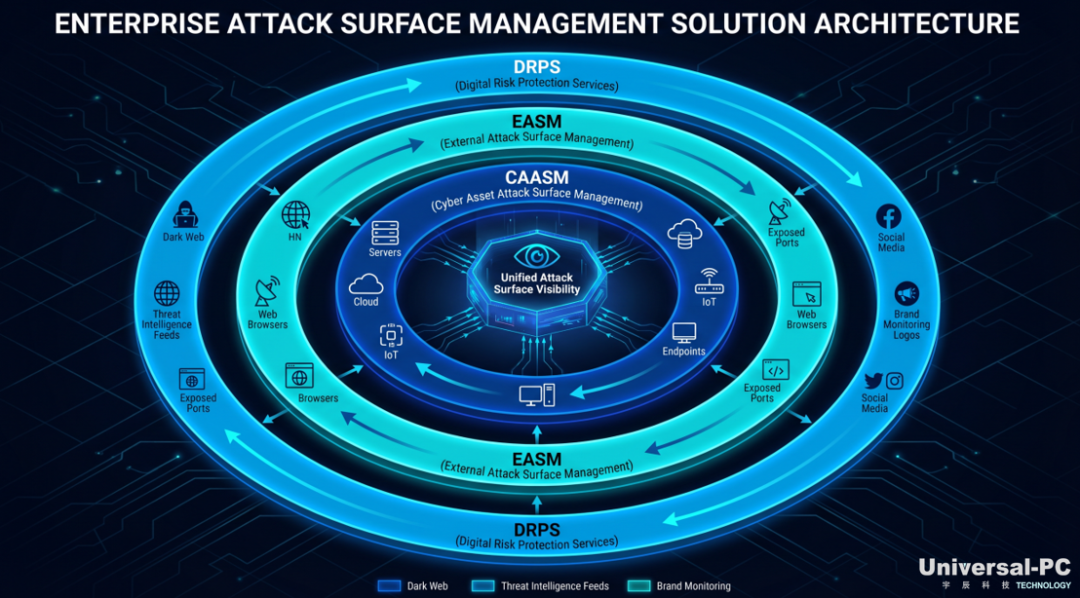
We deeply understand that true security is not a static ledger, but a dynamic game. We run the philosophy of "Product as a Service, Service as a Product" throughout, providing you with a trinity comprehensive protection covering Cyber Asset Attack Surface Management (CAASM), External Attack Surface Management (EASM), and Digital Risk Protection Services (DRPS):
Continuous Monitoring Without Blind Spots: Abandoning periodic snapshots, we provide continuous, dynamic external asset discovery and risk monitoring. Whether assets are hidden deep in subsidiary networks, multi-cloud environments, or concealed within AI instances and mini-program ecosystems, none can escape detection.
Intelligent Risk Prioritization: Integrating a multi-dimensional risk assessment model, automatically filtering invalid alerts, precisely anchoring the top 10% of core high-risk vulnerabilities, and significantly shortening the response time (MTTD) for critical vulnerabilities.
Closed-Loop Operations, Turning Risk into Safety: Through API integration and automated response, the entire process of discovery, classification, assessment, and remediation is unified on a centralized platform, breaking down the barriers between technology and human coordination.
Currently, the service has been successfully deployed for 30+ leading clients, covering key industries such as finance, manufacturing, and retail, escorting enterprises' digital transformation with battle-tested capabilities.
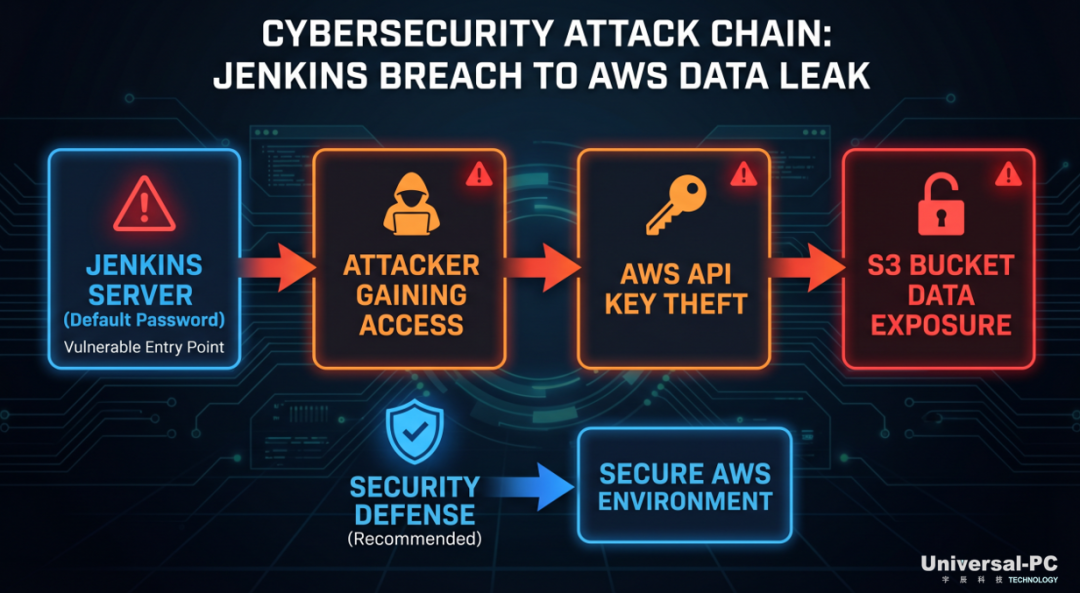
Case Warning: A well-known e-commerce enterprise once paid a painful price for a "change management failure." An external development team brought in to advance a compliance project accidentally exposed a Jenkins server with a default password to the internet. This "shadow asset," not included in IT management, was ultimately exploited by attackers to obtain AWS API keys, leading to the leakage of terabytes of data in S3 buckets containing customer personal information. A project aimed at strengthening data protection instead became the ant hole that broke the dam. If a continuous EASM system had been monitoring, this disaster could have been avoided.
IV. Take Action Now
Attack surface management is not only about reinforcing the defense system, but also a strategic cornerstone for enterprises to maintain business resilience and growth confidence in an era of uncertainty.
Transform unknown threats into controllable peace. UPC is willing to be the round-the-clock guardian of your digital territory.